

Buying a scooter can feel surprisingly complicated. Do you choose three wheels or two? Is your child ready to scoot independently? Should you look for an adjustable kids scooter, a ride-on design or something lightweight enough to carry home when little legs suddenly run out of energy?
As parents, we know the scene well. It is a sunny Saturday morning, everyone is finally dressed, snacks are packed and you are ready for some fresh air. Then comes the question: Will they actually enjoy the walk, or will I end up carrying the scooter, the child and the picnic bag?
The right scooter can make outdoor play easier, more active and much more fun. Here is how to choose a safe, comfortable ride that suits your child now while supporting their confidence as they grow.
Start with your child, not the scooter
The best scooter is not necessarily the one with the most features. It is the one that matches your child’s age, height, balance, confidence and everyday routine.
Before browsing, think about:
- How old is your child?
- Have they used a balance bike, ride-on toy or scooter before?
- Will they ride on smooth pavements, park paths or a mixture of both?
- Do they need a scooter they can carry themselves?
- Would a sit-to-stand design help them build confidence gradually?
- Will you need to store it in a hallway, car boot or buggy basket?
Age guidance is useful, but it is only part of the decision. A cautious child may benefit from extra stability for longer, while a confident rider may be ready to progress sooner. Let your child’s ability lead the way.
Choose between a ride-on, three-wheel or two-wheel design
For younger toddlers: ride-on and multi-stage scooters
If your child is just beginning to explore wheels, a ride-on design can be a reassuring first step. They can sit, push along with their feet and become familiar with steering before they are expected to stand and balance.
The Micro Scooter Mini 3-in-1 Deluxe is designed to grow through three stages, from around 12 months to school age. The product page currently shows it as sold out, so do check the product page for the latest availability and alternative options:
- Ride-on with seat and parent handle
- Toddler trainer with the seat removed
- Independent scooter for confident pre-school riders
It supports up to 20kg with the seat and up to 50kg without it. That makes it a practical option for families who want one adaptable product rather than buying a separate ride-on, trainer and scooter.

For early riders: three-wheel scooters
Three-wheel scooters are often the best scooter for toddlers and younger children who are still developing their balance. Two wheels at the front provide a stable base, while lean-to-steer designs help children learn to turn by shifting their body weight.
This style is particularly useful when looking at scooters for 3 year olds. Your child can practise:
- Standing securely on the deck
- Pushing with one foot
- Leaning gently to turn
- Using the rear brake
- Looking ahead while riding
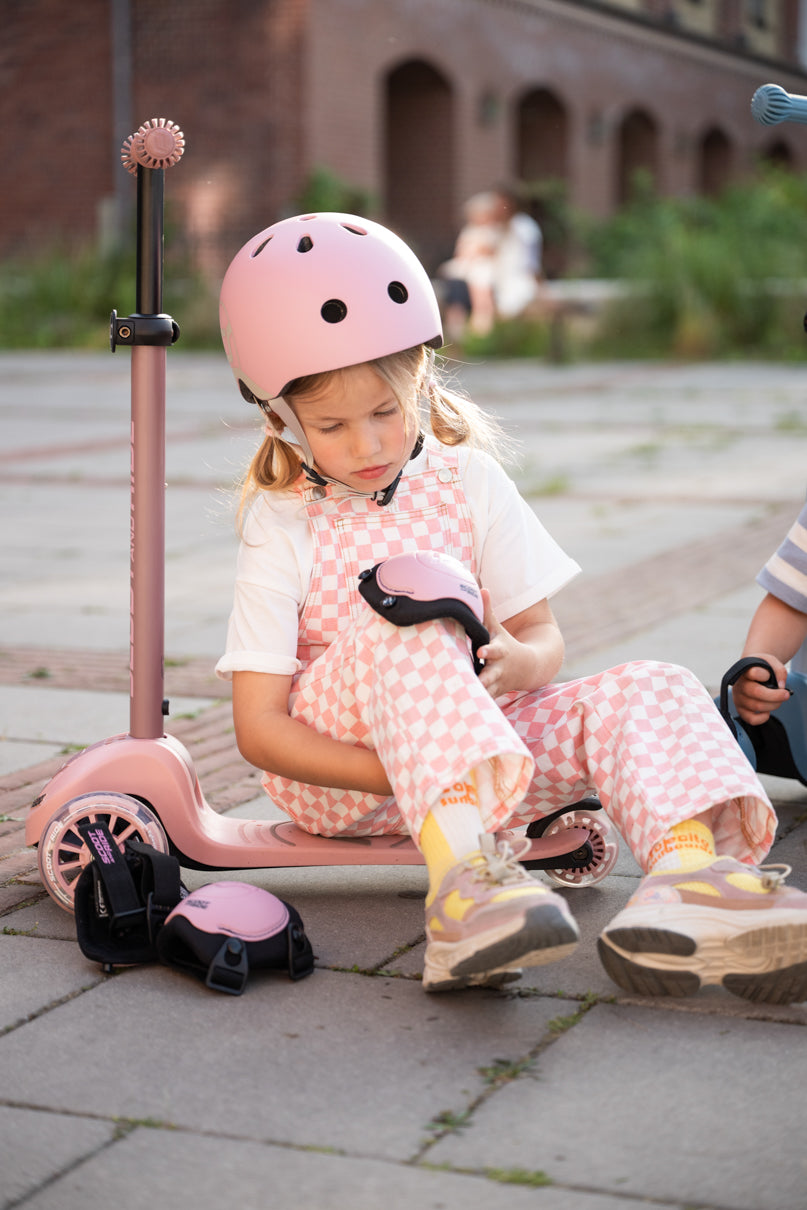
The Scoot and Ride Highway Kick 3S LED Scooter is designed for children aged approximately 3–6 years. It has adjustable handlebars, a rear brake, rollover protection, a foldable design and front LED wheels that light up as your child rides. The rose colour page currently shows the model as out of stock, so check the product page for availability and alternative colours.
For older or confident riders: two-wheel scooters
Two-wheel scooters require more balance and coordination. They can be a good next step once your child is comfortable steering, stopping and controlling their speed on a three-wheel model.
Do not feel pressured to move up too quickly. Scooting should feel exciting, not overwhelming. If your child is wobbling, struggling to brake or becoming frustrated, return to a quieter surface and practise the basics.
A scooter is there to support independence. It should never become a test they feel they are failing.
Look for an adjustable kids scooter
Children grow quickly. The scooter that fits perfectly in spring can feel too small by autumn, so an adjustable handlebar is one of the most useful features to look for.
When your child is standing on the scooter:
- Their arms should be comfortably bent, not locked straight.
- Their shoulders should stay relaxed.
- They should be able to grip the handlebars securely.
- The handlebar should not be so high that steering feels awkward.
- They should be able to reach and use the brake confidently.
An adjustable kids scooter can also make sharing easier between siblings, although always check the manufacturer’s age and weight guidance for each rider.
The Mini Micro Deluxe LED Blue is designed for children aged around 2–5 years. Its adjustable handlebar, grippy footplate and lean-to-steer design support growing riders. The battery-free LED wheels add a little extra excitement without needing charging or replacement batteries.

Safety First: check these features before buying
A scooter should make outdoor play more enjoyable, but safety always comes first. Before your child sets off, check the scooter and the riding environment.
Look for a stable deck
A sturdy, non-slip deck gives children a secure place to stand. A deck that is too narrow can feel unstable for beginners, while one that is excessively large may make steering harder.
Check the braking system
A rear brake should be easy for your child to find and press with their foot. Practise stopping at walking speed before heading downhill or riding near other people.
Consider rollover protection
Younger children can sometimes tip forward if a front wheel catches on an uneven surface. Designs with rollover protection offer an additional layer of reassurance for early riders.
Use protective gear
A correctly fitted helmet is essential. Knee and elbow pads can also be helpful while your child is learning, particularly on hard surfaces.
Teach your child to:
- Wear their helmet every time
- Ride away from roads and traffic
- Slow down near gates, corners and pedestrians
- Keep both hands on the handlebars
- Stop when asked
- Never ride on wet, icy or uneven ground without close supervision
For electric scooters, remember that privately owned e-scooters cannot generally be used on UK public roads, pavements or cycle paths. This article focuses on non-electric scooters for active outdoor play.
Ease of Use matters for parents too
We all want our children to be independent, but realistically, parents often end up carrying the scooter. Choose a model that is lightweight enough for you to manage comfortably.
Useful everyday features include:
- Tool-free adjustments
- A foldable frame
- Lightweight construction
- Puncture-free wheels
- Replaceable parts
- A simple brake
- Easy-to-clean surfaces
The Scoot and Ride Highway Kick 1 Ash is a useful example for younger children. It changes from a ride-on to a stand-up scooter, has three wheels for stability and can be adjusted without tools. Its rear brake and non-slip footpad help little riders build confidence while keeping the experience straightforward for parents.
Grab your buggy, pack a snack and choose a safe, open space for those first practice sessions. A quiet pavement, courtyard or smooth park area is usually more enjoyable than a busy path.
Match the scooter to your family’s outdoor routine
Think about where the scooter will actually be used. For short trips to the park or nursery, portability may be your priority. For longer outdoor adventures, comfort and durability may matter more.
Use this quick guide:
- Smooth pavements: most lightweight three-wheel scooters should work well.
- Park paths: choose durable wheels and a stable deck.
- Busy areas: prioritise reliable braking and close supervision.
- Public transport or car journeys: look for a foldable or lightweight design.
- Growing children: choose adjustable handlebars and a generous weight limit.
- Very young riders: consider a ride-on or multi-stage model.
The aim is not to buy the most advanced scooter. It is to choose a ride that helps your child enjoy fresh air, movement, new sights and the freedom to explore.
Kids scooters FAQs
What is the best scooter for toddlers?
For toddlers, look for a low, stable design with three wheels or a ride-on conversion. A multi-stage model such as the Micro Scooter Mini 3-in-1 Deluxe can help children progress from sitting to standing at their own pace. The product page currently shows it as sold out, so it is worth checking the page for current availability and alternative options.
Are scooters suitable for 3 year olds?
Yes, many three-wheel scooters are designed for children from around age three. Always check the manufacturer’s age, height and weight guidance, and supervise your child closely while they learn.
Should my child start with three wheels?
Three wheels are often a good starting point because they provide more stability and make steering easier for beginners. Move to a two-wheel scooter when your child has developed stronger balance and control.
How high should scooter handlebars be?
Your child should be able to stand comfortably with relaxed shoulders and slightly bent arms. The handlebars should not force them to hunch or reach upwards. Adjustable models make it easier to achieve a comfortable fit as they grow.
Does my child need a helmet on a scooter?
Yes. A properly fitted helmet should be worn every time, even for short rides. Knee and elbow pads are also useful while your child is learning.
How can I make scooting more enjoyable?
Keep the first rides short and positive. Choose a quiet space, celebrate small improvements and avoid rushing your child. Add a destination, such as a playground or picnic spot, so the scooter becomes part of an enjoyable outdoor adventure rather than a lesson.
Final Thoughts
Choosing between kids scooters does not need to feel daunting. Start with your child’s stage, focus on Safety First and Ease of Use, then look for features that support their confidence as they grow.
The right scooter can turn an ordinary walk into a small adventure: wheels humming over the pavement, cool air on your faces and your child proudly travelling a little further under their own steam.
Explore the Let's Play Outside scooter collection when you are ready to find the right fit. Orders over £100 qualify for free UK shipping, every purchase is covered by a 30-day money-back guarantee, and 0% interest ClearPay is available to help spread the cost. Most importantly, choose a ride that gives your child space to play, practise, discover and grow.


