

September mornings have a way of feeling busy before the day has even started. Have they eaten breakfast? Where are the school shoes? Did anyone pack the water bottle? And how are we going to get to nursery or school without a last-minute dash?
For many families, a scooter can make the school run feel lighter, more active and a little more enjoyable. It turns the journey into outdoor play, gives children a sense of independence and can help take the sting out of a tiring walk.
But the best school-run scooter is not simply the fastest or brightest model. It needs to suit your child’s age, offer reassuring stability and be easy to manage when you reach a busy school gate.
Here’s how to choose the right scooter, build safer habits and make your morning journey smoother in 2026.
Why choose a scooter for the school run?
A scooter can be a practical piece of children’s outdoor gear, but it is also a lovely way to add fresh air and movement to the day.
Instead of rushing straight from the front door into the car, your child gets time to notice the changing leaves, feel the cool September air and enjoy a little freedom to explore. Even a short nursery journey can become a positive daily ritual.
Scooting may also help children:
- Build balance, coordination and confidence
- Enjoy active outdoor play before the school day begins
- Feel more involved in the family journey
- Develop patience and awareness around other pedestrians
- Arrive feeling energised rather than cooped up
Of course, every child and route is different. A scooter should never be used to hurry a child through a busy road or crowded pavement. Think of it as a tool for a calm, planned journey, not a race to the school gates.
Choosing the best scooter for toddlers and young children
When you are choosing between kids scooters, start with your child’s developmental stage and the route you will take.
For nursery-age children, a three-wheeled scooter or ride-on design can provide extra stability. Look for:
- An age-appropriate design
- A low, stable deck or seat
- Easy steering
- A secure, grippy footplate
- A child-sized handlebar
- A reliable rear brake
- Adjustments that do not require complicated tools
A scooter that grows with your child is particularly useful for families who want long-term value from their outdoor equipment.
Scoot and Ride Highway Kick 1 – Forest
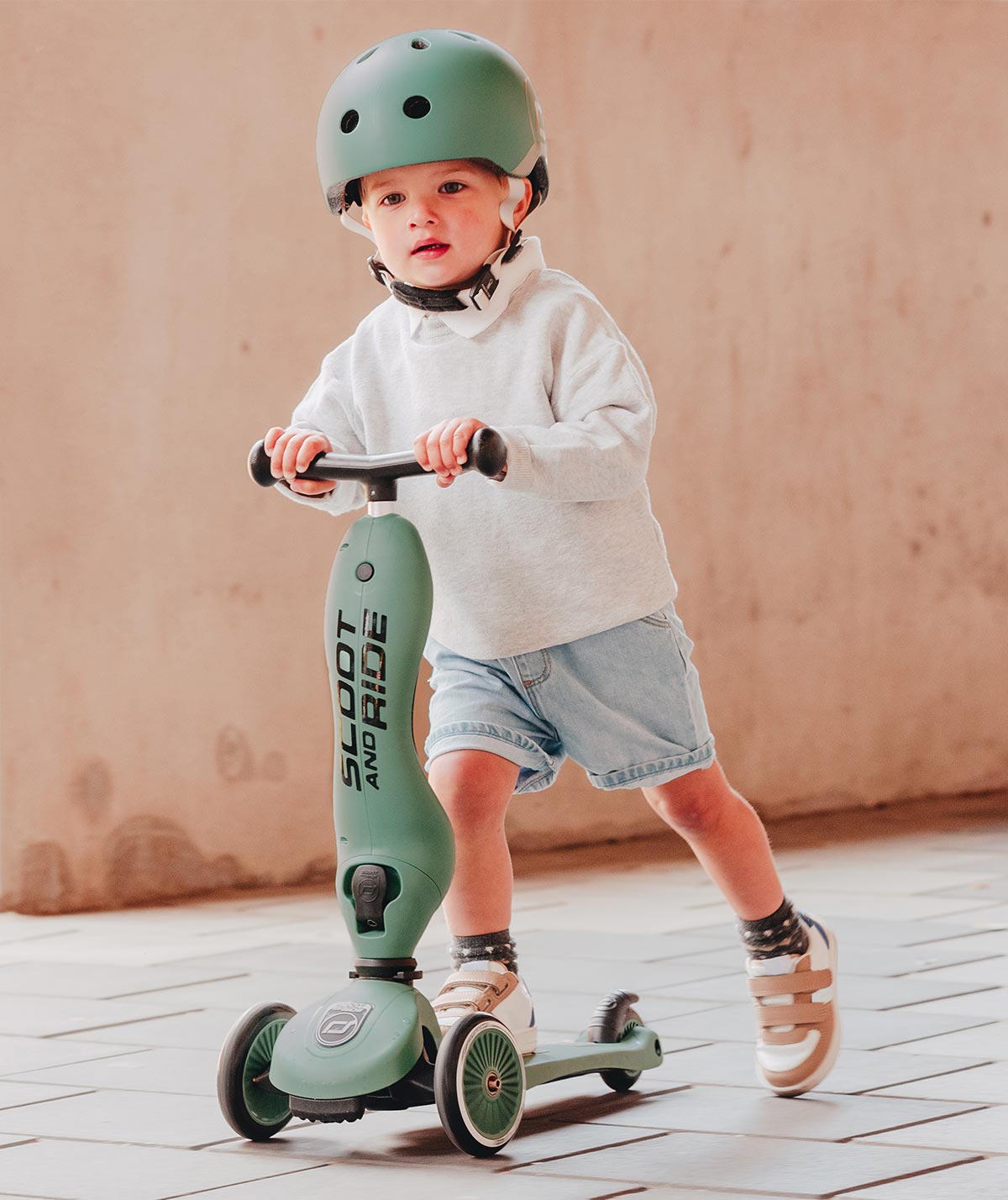
The Scoot and Ride Highway Kick 1 – Forest is designed for children from approximately 1 to 5 years and offers two stages in one:
- A ride-on mode for younger toddlers
- A stand-up scooter mode as confidence develops
- Three wheels for additional stability
- Tool-free adjustments
- A non-slip footpad
- Front rollover protection
- A rear brake
This makes it a useful option for a nursery run where your child may manage part of the journey independently but still needs a ride-on option when little legs get tired.
At the time of writing, it is listed at £84.99. Check the product page for current availability before ordering.
Mini Micro Deluxe LED – Blue
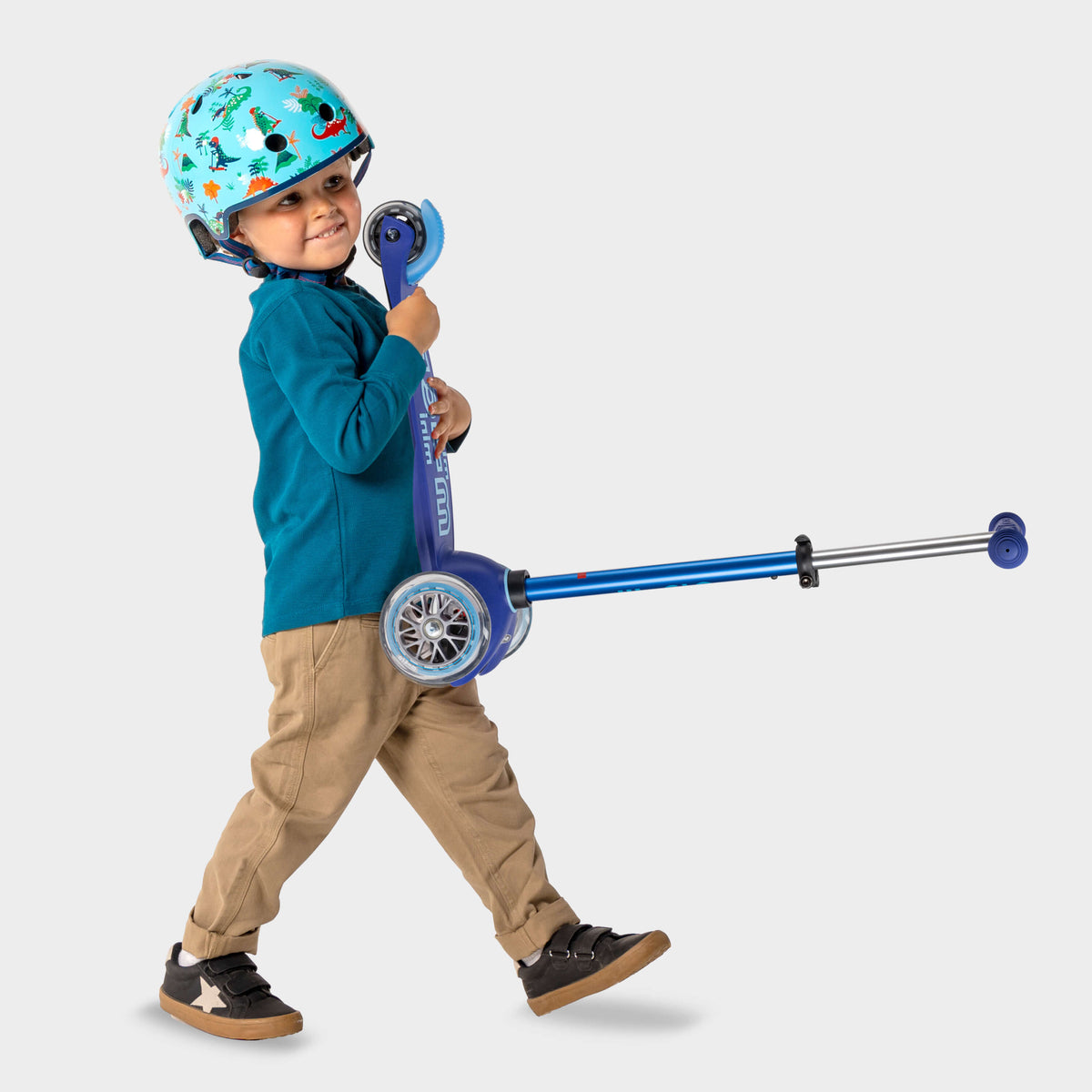
For children aged around 2 to 5 years, the Mini Micro Deluxe LED – Blue is a lightweight option built around balance and simple lean-to-steer movement.
Useful school-run features include:
- Adjustable handlebar to support growing riders
- Battery-free LED wheels that light up as they spin
- A reinforced footplate with anti-slip silicone mouldings
- Puncture-free wheels
- A rear brake
- Replaceable parts for longer-term use
The glowing wheels are fun, but they can also help your child stand out a little more during dull autumn mornings. They are not a replacement for reflective clothing or adult supervision, especially in low light.
The Mini Micro Deluxe LED – Blue is listed at £84.95. As with any product, check the current product page for stock information and specifications.
Explore more options in the Scooters & Kickboards collection.
Safety first: make helmets part of the routine
A helmet should be as automatic as shoes and a coat. Put it on before the scooter comes out, rather than trying to add it halfway down the road.
The right helmet should:
- Fit snugly without rocking from side to side
- Sit level on the head, not tipped backwards
- Stay comfortable when worn over the whole journey
- Have straps adjusted so they do not hang loose
- Be checked regularly as your child grows
The Scoot and Ride Helmet – Forest is available in two size ranges:
- XXS–S: approximately 45–51 cm head circumference
- S–M: approximately 51–55 cm head circumference
It also includes soft internal padding, a magnetic buckle and a rear LED light for added visibility. At the time of writing, it is listed from £38.21.
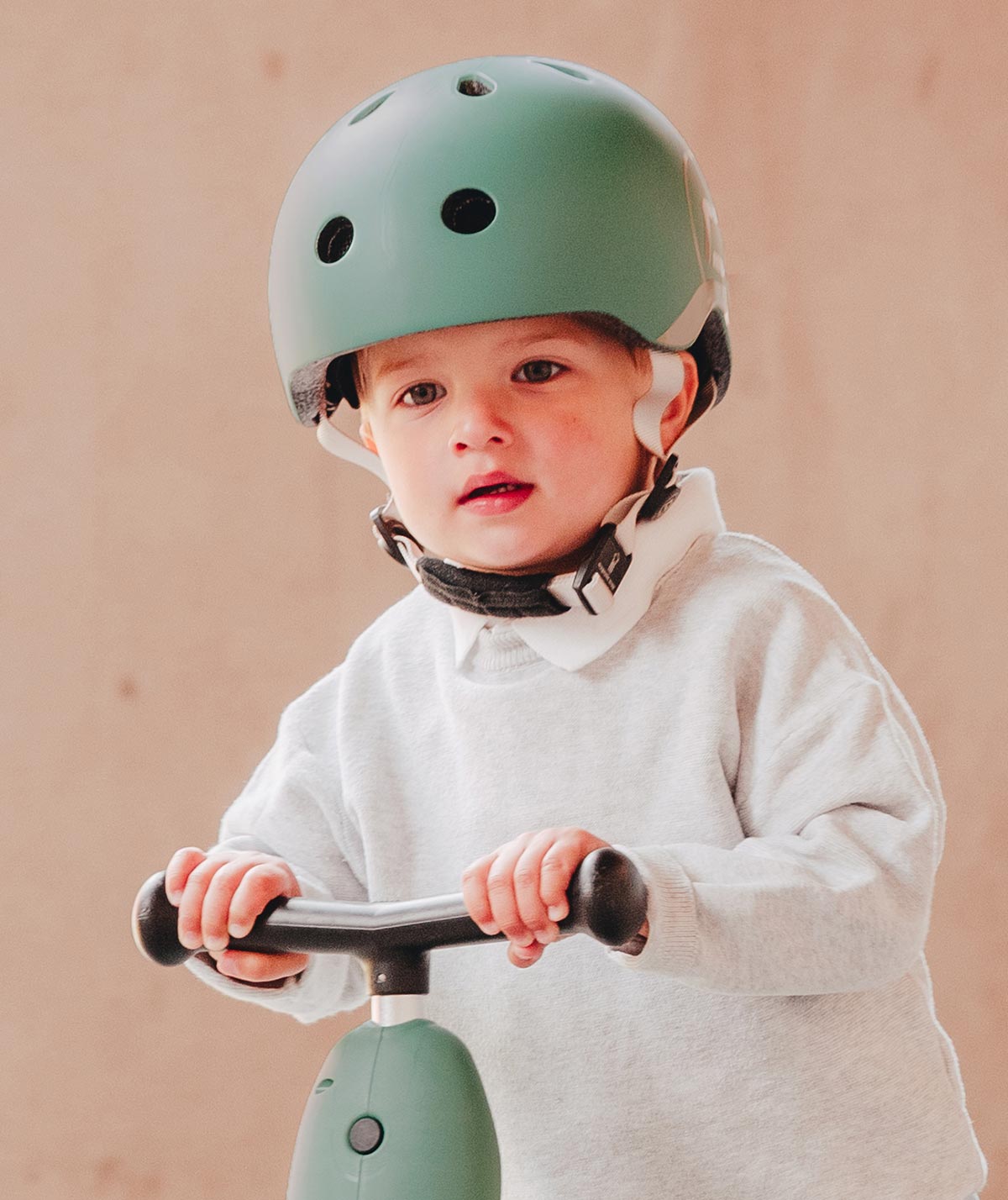
Measure your child’s head before ordering, and remember that a helmet should be replaced after a significant impact, even if there is no obvious damage.
For extra reassurance, younger or less confident riders may also benefit from knee and elbow pads. Choose comfortable trainers rather than sandals or loose footwear, and avoid scarves, long untied drawstrings or baggy clothing that could catch.
School-run habits that keep everyone safer
The safest school run is predictable. Children learn what to expect, and parents spend less time repeating instructions while trying to carry bags and find lost gloves.
Before your first September journey, practise the route at a quieter time. Look for:
- Smooth, reasonably flat pavements
- Fewer busy junctions
- Safe places to stop
- A clear area where your child can dismount
- Any school-street restrictions or nursery rules
Then make these habits part of every trip:
- Stay close to your child. Younger children should remain within easy reach.
- Keep to a walking pace. A school run is not a race.
- Give pedestrians priority. Slow down or walk the scooter when passing people.
- Keep away from the kerb. Position your child on the inside of the pavement while the adult walks nearer the road.
- Stop and dismount at crossings. Push the scooter across rather than riding.
- Walk in busy areas. This is especially important near school entrances.
- Keep both hands available. Carry school bags in a small rucksack rather than hanging them from the handlebars.
Guidance from Staffordshire’s active school travel guide and Torbay’s scooting advice also recommends testing the route, staying considerate around pedestrians and walking across roads.
The two-minute pre-ride check
A quick check before leaving can prevent a wobble, loose part or unnecessary delay halfway to school.
Use this simple list:
- Are the handlebars secure and set to a comfortable height?
- Are the grips and bar ends in good condition?
- Is the footplate dry and free from damage?
- Are the wheels securely attached?
- Do they spin freely?
- Does the rear brake work?
- If the scooter folds, is it fully locked?
- Is the helmet fitted correctly?
- Are trainers tied and clothing safely tucked away?
Do the check while your child puts on their coat. It becomes part of the routine rather than another job to remember.
Make mornings calmer with a little preparation
The biggest school-run improvement may happen before breakfast.
Try setting up a small “scooter station” near the door with:
- Helmet
- Scooter
- Waterproof jacket
- Reflective layer or bright clothing
- Water bottle
- Small rucksack
Pack bags and check the scooter the night before. On wet mornings, allow extra time: slippery surfaces can make braking more difficult, and puddles can hide uneven ground.
You can also create a simple rule such as, “Helmet first, scooter second.” Children often respond well to a clear sequence, especially when mornings already feel full.

Frequently asked questions
What is the best scooter for toddlers?
For toddlers, choose a stable model designed for their age and stage. A three-wheeled scooter or ride-on-to-scooter design can offer more support than a two-wheeled model.
The Scoot and Ride Highway Kick 1 – Forest is suitable for approximately ages 1–5 and can adapt as a child moves from sitting to standing.
Should my child wear a helmet on a scooter?
Yes. A properly fitted helmet is a sensible everyday safety habit for children using scooters. Make sure it sits level, feels secure and is replaced after a significant impact.
Can my child ride a scooter on the pavement?
Rules and local guidance can vary, so check the route and any local restrictions. As a general school-run habit, stay on suitable pavements, give pedestrians priority, move at walking pace and dismount at crossings. Never treat the pavement like a racetrack.
Should children ride scooters in the rain?
They can, but extra care is needed. Wet surfaces may reduce grip and make stopping harder. Check the forecast, choose a suitable route and walk the scooter if conditions become slippery or visibility is poor.
How can I stop school bags affecting balance?
Use a small, lightweight rucksack. Avoid hanging bags, lunchboxes or coats from the handlebars, as uneven weight can make steering more difficult.
Final thoughts
A scooter will not remove every school-run challenge. There will still be missing socks, forgotten water bottles and the occasional “I can’t possibly walk another step.”
But with the right equipment, a properly fitted helmet and a few consistent habits, the journey can become more manageable, and much more enjoyable.
Grab the helmet, check the wheels and set off at a comfortable pace. Those few minutes of fresh air and outdoor play can support confidence, coordination and independence while giving you precious time together before the day begins.
For more durable, flexible children’s outdoor gear, explore the Let's Play Outside collection.


