

Buying a first bike is exciting. Right up until you’re comparing wheel sizes and wondering whether your child will actually feel comfortable on it. Do you choose the one that fits today, or leave room to grow? And how much does age really tell you?
As a parent, I’d start with your child’s inseam and how the bike feels, then use age and height as helpful pointers. This guide covers common 12" to 20" sizes, practical fit checks, and features that can make family rides easier and more comfortable.
Kids’ bike size chart: start with inseam, not age
The chart below is a starting point, not a substitute for checking the bike in person. Children grow at different rates, and two bikes with the same wheel size can fit differently. If you’re between sizes, compare your child’s measurements with the bike’s specific size guidance and try it before deciding.
| Wheel size | Approx. age | Suggested inseam | Suggested height |
|---|---|---|---|
| 12 inch | 2–4 years | 14–17 inches | 35–39 inches |
| 14 inch | 3–5 years | 16–20 inches | 38–46 inches |
| 16 inch | 4–8 years | 18–22 inches | 41–53 inches |
| 20 inch | 7–13 years | 22–25 inches | 48–61 inches |
These ranges overlap, and that’s normal. Age is only a rough guide; your child’s proportions and comfort matter more. The REI kids’ bike guide also recommends looking beyond age when choosing a bike.
How to measure your child’s inseam
- Have your child stand straight on a flat floor, ideally wearing the shoes they’ll ride in.
- Place a book between their legs, spine upward, as if it were a bike saddle.
- Make sure the book sits snugly at the crotch, then measure from the floor to the top of the book.
Compare that number with the bike’s recommended inseam range. If your child is growing quickly, measure again close to the time you buy.
Check the fit before you commit
A bike can look just right and still feel awkward once your child climbs on. If you can, take them along for a fit check. A sunny Saturday test ride can tell you more than a chart alone.
- Standing over the frame: With feet flat on the ground, your child should have comfortable clearance over the frame. The amount depends on the bike’s design, so check the manufacturer’s guidance.
- Saddle: When seated, your child should feel stable and comfortable. On a pedal bike, a slight bend in the knee when the pedal is at its lowest point is a useful starting check.
- Handlebars: Your child should be able to reach the grips without stretching or hunching, with room to steer comfortably.
- Brakes: Check that your child can reach and squeeze the levers. Small hands can find hard-to-reach brakes difficult to use.
- Starting and stopping: Ask them to try getting on, moving off, stopping and putting a foot down. Confidence matters as much as the number on the size chart.
Skip buying a bike for your child to grow into. A bike that feels too big can be harder to balance, steer and stop. A close fit that feels manageable now is often a better start than extra size that makes the first rides daunting.
Balance bike or pedals: which makes sense now?
A balance bike lets a child practise pushing along with their feet and learning to steer and balance before managing pedals. A pedal bike may suit a child who already feels ready for that next step. There’s no need to rush either way: short, relaxed practice sessions can help build confidence.
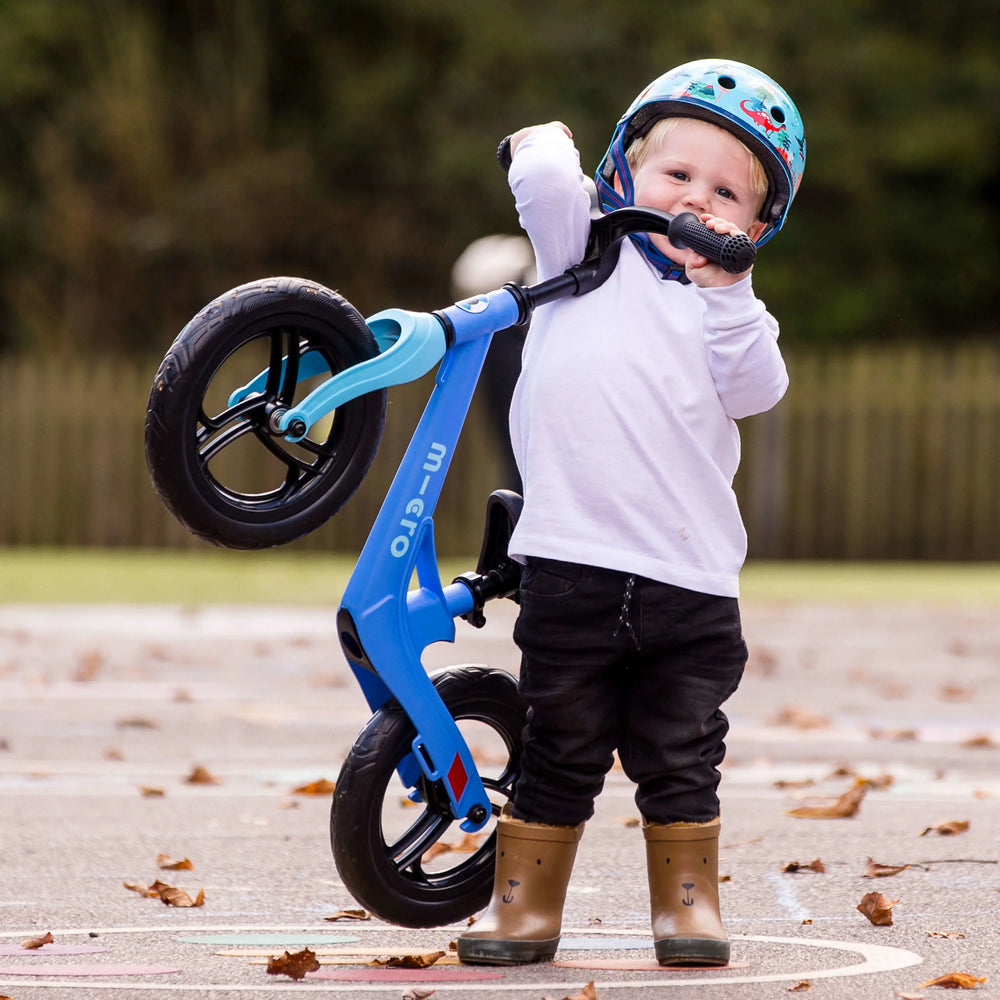
For younger riders, the Micro Scooters Balance Bike Lite Blue is listed for ages 2–5 and weighs 2.6kg. It has an adjustable saddle and puncture-proof tyres, useful details if you’d like a balance bike that’s easier to lift and adjust as your child grows.
Everyday features that make rides easier
Before you picture long park loops, think about the small everyday moments: helping your child start, carrying the bike up a step, or taking a quick break when little legs need a rest.
Look for:
- A manageable weight: A bike that’s easier for your child to handle can make starts and stops feel less intimidating.
- Reachable controls: Check the brakes and grips suit your child’s hands.
- A chain guard: This can help reduce contact with the moving chain and keep clothing away from it.
- Adjustable parts: A height-adjustable saddle or handlebar can help you make small fit changes.
- Straightforward setup: Check what assembly is required and follow the supplied instructions carefully.
A look at the Glerc kids’ bike range
If you’re comparing first bikes, the Glerc 12" Maggie is listed for ages 2–4. Its product details include removable training wheels, front and rear hand brakes, short-reach aluminium brake levers and an adjustable handlebar height. It’s described as 85% pre-assembled, though you’ll still need to complete assembly and check everything before riding.
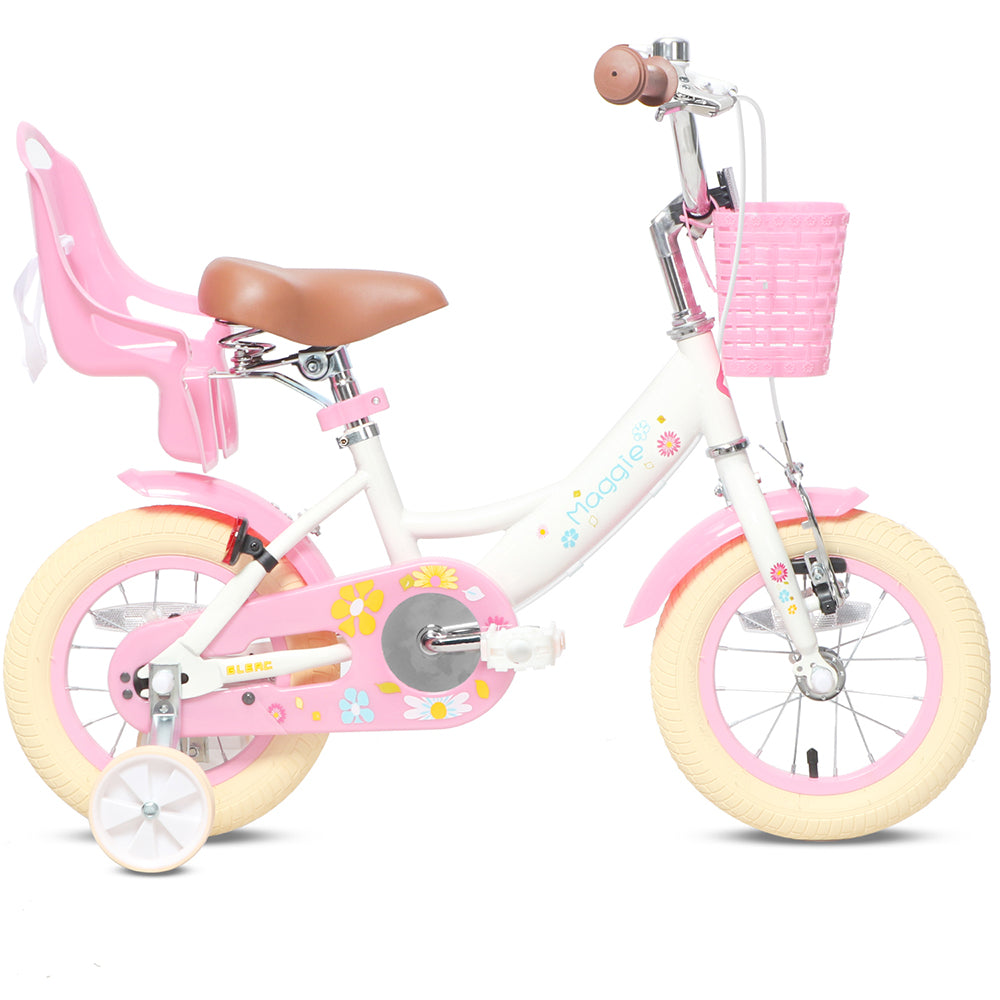
The Glerc 14" Maggie has front and rear hand brakes, short-reach aluminium brake levers, a semi-enclosed chain guard, removable training wheels and adjustable handlebar height. The product listing also describes a lifetime alloy frame warranty and says the bike arrives 85% pre-assembled.
For a bigger rider, the Glerc 20 Inch Fantacy features a dual hand-brake system, adjustable seat and handlebars, and a sturdy steel frame. It is listed as 85% pre-assembled. As with any bike, check the fit and ensure the brakes, wheels and other parts are properly assembled before your child rides.
Safety first: helmet, checks and a calm start
Choose a helmet that fits your child’s head and follow the manufacturer’s fitting instructions. The HealthyChildren.org guide to choosing the right-size bicycle includes advice on bike and helmet fit.
Before every ride, do a quick check:
- Make sure the helmet sits level and is securely fastened.
- Check the tyres, brakes and handlebars.
- Ensure your child can reach and operate the brakes.
- Start somewhere quiet and away from traffic, and stay close while they practise.
The first ride doesn’t need to be a big expedition. A few gentle turns on a quiet path can be enough for everyone to find their rhythm.
FAQs
What size bike is right for a 4-year-old?
It depends on your child’s height, inseam and the way a particular bike fits. A 12", 14" or 16" bike may suit children around this age. Use the chart as a guide, then check the manufacturer’s sizing information and have your child try the bike if possible.
Should my child’s feet touch the floor while sitting on the saddle?
For a beginning rider, being able to put a foot down comfortably can help them feel more secure. On a pedal bike, saddle position may change as their skills develop. Follow the bike maker’s fit guidance and choose a setup that lets your child control starts and stops confidently.
Are training wheels a good idea?
They can help some children get familiar with pedalling, but they don’t teach balance in the same way a balance bike does. Consider your child’s confidence and experience, and check whether the bike’s training wheels are removable as skills develop.
Is a lightweight bike worth it?
It can be helpful. A bike that feels manageable may be easier for a child to steer and move, and easier for a grown-up to carry when the ride ends early. Still, fit and comfort matter too, compare the whole bike, not weight alone.
Final thoughts
Choosing the right size can make the first rides feel less like a test and more like play. Take your time with the fit, let your child have a go, and keep those early outings short and cheerful. The fresh air, new sights and little moments of confidence are what you’ll remember, not whether you covered another hundred metres.
Explore the Glerc bikes or browse Micro Scooters balance bikes. Let’s Play Outside offers free UK shipping on orders over £100, a 30-day money-back guarantee and 0% interest ClearPay payment options.


